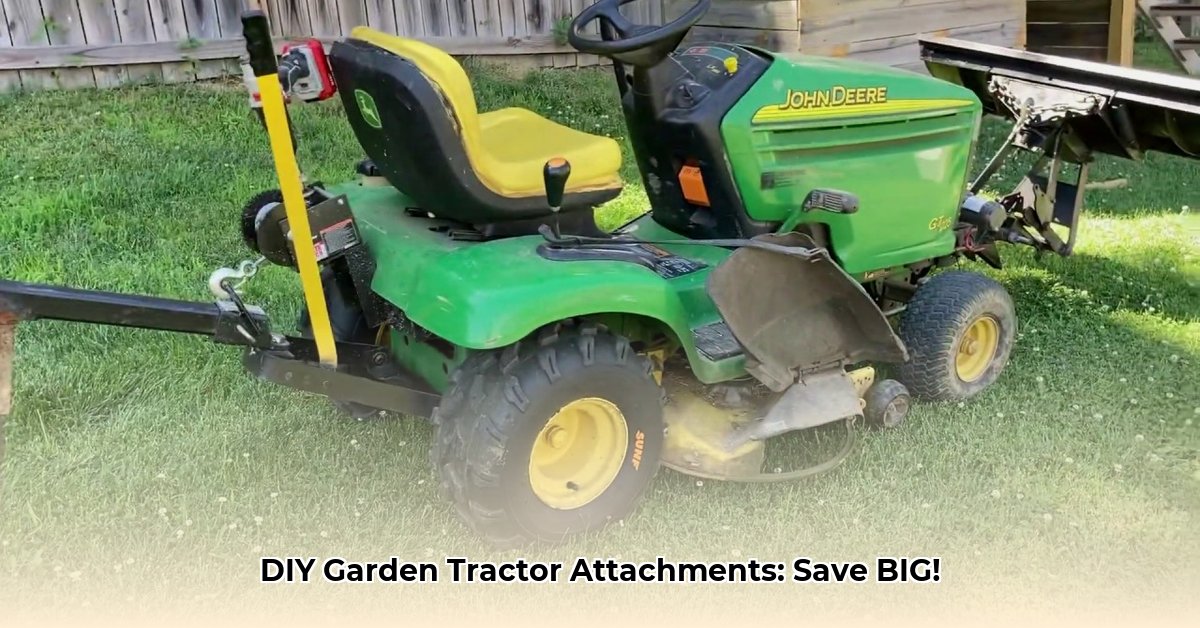
Building your own garden tractor attachments offers a rewarding blend of cost savings, customization, and sustainable practices. This guide provides step-by-step instructions to empower you to create your own tools, perfectly tailored to your gardening needs. For more advanced projects, check out this brush cutter guide. Let's get started!
Planning and Design: The Foundation of Success
Before you pick up a wrench, meticulous planning is paramount. Identify the specific tasks your attachment will perform. Need a cultivator for soil preparation, a trailer for hauling, or a specialized tool for a unique gardening challenge? Sketch your ideas – even rudimentary drawings are helpful. Explore online resources for inspiration; many websites and YouTube channels showcase inventive garden tractor modifications. Adapt existing designs to your tractor and garden's dimensions. A well-conceived design minimizes future problems and maximizes safety. Remember the adage: measure twice, cut once!
Material Selection and Acquisition: Smart Sourcing for Sustainability
Choosing appropriate materials significantly impacts the durability and longevity of your attachment. Durable steel is a common choice for its strength and resistance to wear. Consider its thickness; thicker steel offers greater strength but increases weight, potentially affecting your tractor's performance. Assess your budget and the attachment's intended use. For less demanding tasks, explore cost-effective alternatives like reclaimed wood or high-density plastic. Repurposing existing materials is highly recommended, offering both cost savings and environmental benefits. Local scrap yards and metal recycling centers are invaluable resources. Supporting local suppliers not only reduces costs but strengthens community ties. Remember to acquire sufficient materials—running short mid-project is frustrating.
Construction Techniques: The Hands-On Phase
This is where the creativity flows! Begin with simpler projects to build confidence and refine your skills. A basic cultivator, for example, provides a great entry point. As your expertise grows, you can tackle more complex projects, such as a snow plow or custom trailer. Safety must always be prioritized. Wear appropriate personal protective equipment (PPE), including safety glasses, gloves, and sturdy boots. For welding, a welding helmet is non-negotiable. Never compromise on safety.
Here's a risk assessment matrix:
| Task | Potential Hazards | Mitigation Strategies |
|---|---|---|
| Welding | Burns, eye damage, fumes, electrical shock | Adequate ventilation, welding helmet & gloves, electrical safety measures. |
| Material Handling | Cuts, crushing injuries, strains | Safe lifting techniques, material handling equipment (if needed), avoid solo work. |
| Equipment Operation | Equipment malfunction, injury, electric shock | Regular maintenance, adherence to manufacturer's instructions. |
| Attachment Installation | Improper attachment, equipment damage, injury | Precise measurements, secure fastenings, proper tractor capacity. |
Step-by-Step Guide: Building a Simple Cultivator
Let's build a cultivator.
Step 1: Design: Sketch the cultivator's width and the number of tines. Soil type influences tine configuration.
Step 2: Gather Materials: Steel tubing or rebar for tines, angle iron for the frame, and assembly bolts. Determine quantities based on your design.
Step 3: Cut and Shape: Use a metal cutting saw or grinder (with PPE) to cut the steel precisely to your design dimensions.
Step 4: Welding (or Bolting): Securely weld or bolt components. Bolting is simpler for beginners. Ensure strong, secure connections.
Step 5: Mounting: Attach the cultivator to your tractor's three-point hitch, guaranteeing secure and aligned mounting.
Step 6: Testing: Test the cultivator in a small, cleared area; make adjustments before garden use.
Troubleshooting and Maintenance: Ensuring Longevity
Even the most well-planned projects can encounter problems. Don't panic! Online forums, YouTube, or experienced professionals can provide solutions. Regular maintenance is key. Clean after each use, lubricate moving parts, and periodically check and tighten bolts and connections. Preventative maintenance significantly extends an attachment's lifespan.
Legal Considerations and Safety: Adherence to Regulations
Before operation, confirm that your attachments comply with local laws and safety standards. This protects you and others.
The Broader Perspective: Beyond Cost Savings
Building your own attachments is more than just saving money; it's about creating customized tools, fostering a deeper connection with your work, and implementing sustainable farming practices. It's about the pride and satisfaction of crafting something yourself. Embrace the ingenuity and build something amazing!